⚡ Quick Answer
For most home growers, an all-in-one grow bag is the simpler, more forgiving starting point — it comes pre-filled with sterilised substrate, requires no extra equipment, and works well for a single, straightforward fruiting cycle. A monotub takes more setup (substrate, casing layer, humidity and fresh-air management) but offers larger yields, multiple flushes, and more control for growers who want to scale up or experiment with technique. This guide breaks down the real differences in cost, effort, yield, and control, so you can pick the right setup for your goals.24–27°CIdeal colonisation temperature, both setups
150–190gTypical yield, 1lb grow bag
750g–1kgTypical yield, larger monotub setup
2–4Flushes typically possible with a monotub
Jump to a section
1. What Each Setup Actually Is
2. Side-by-Side Comparison
3. Grow Bags in Detail
4. Monotubs in Detail
5. Yield and Flushes
6. Which Should You Choose?
FAQ1. What Each Setup Actually Is
🛍️
All-in-One Grow Bag
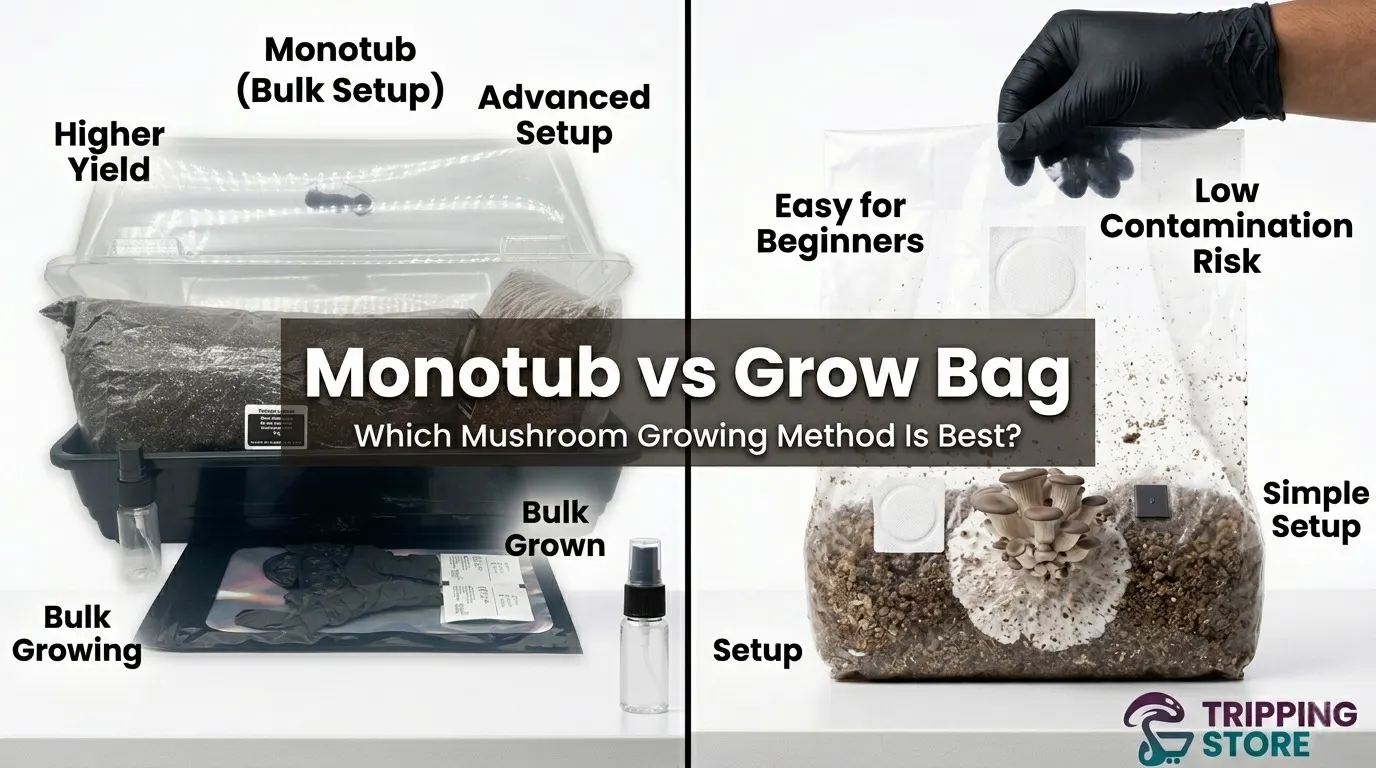
A pre-sterilised bag of substrate with an injection port and filter patch, designed for straightforward, low-equipment cultivation from a single spawn point.
🪣
Monotub
A larger, ventilated plastic container holding a bigger volume of substrate, usually topped with a casing layer, offering more surface area and better environmental control.2. Side-by-Side Comparison
| Factor | Grow Bag | Monotub |
|---|---|---|
| Setup effort | Minimal | Moderate |
| Extra equipment needed | None | Container, casing layer, humidity tools |
| Typical yield per cycle | 150–190g (1lb bag) | 750g–1kg+ |
| Number of flushes | Up to 3 (sometimes more) | 2–4 |
| Environmental control | Limited | High |
| Best for | Beginners, single-cycle growing | Scaling up, repeated cycles |
3. Grow Bags in Detail
The appeal of an all-in-one grow bag is simplicity — the substrate is already sterilised, measured, and bagged, so there's very little that can go wrong on the substrate side.Best For
First-Timers
No substrate prep, no extra containers — just inoculate through the port and wait for colonisation.
Temperature
24–27°C
Consistent colonisation temperature matters more than the container type — a heat mat with a thermostat helps either setup.
Limitation
Smaller Yield
Less substrate volume means a lower ceiling on total yield compared to a monotub, and fewer viable flushes.
✅ Best Use Case — If this is your first cultivation attempt, or you just want a straightforward single-cycle grow without extra equipment, a grow bag is the lower-risk starting point.
4. Monotubs in Detail
A monotub trades simplicity for scale and control. With more substrate volume and a casing layer, it can support significantly larger and more repeated harvests — but it asks more of the grower in return.Best For
Scaling Up
Larger substrate volume supports bigger total yields and multiple flushes from a single setup.
Requires
Active Management
Fresh air exchange, humidity, and casing layer moisture all need regular attention throughout the fruiting cycle.
Limitation
More Setup Time
Preparing substrate, container, and casing layer takes meaningfully longer than opening a pre-filled bag.
✅ Best Use Case — If you've already run a successful grow bag cycle and want to scale up yield or get more flushes from one setup, a monotub is the natural next step.
5. Yield and Flushes
| Setup | Typical First Flush | Total Across All Flushes |
|---|---|---|
| 1lb grow bag | ~100–130g | 150–190g |
| 2lb grow bag | ~200–260g | 350–420g |
| 4lb grow bag | ~400–550g | 750g–1kg |
| Monotub (comparable substrate volume) | Similar first flush | Higher total, due to more flushes |
ℹ️ Key Yield Fact — The biggest yield difference between formats usually isn't the first flush — it's how many additional flushes the setup supports. Monotubs generally sustain more flushes than a single grow bag of comparable substrate volume, which is where the total yield gap comes from.
6. Which Should You Choose?
| If You Want... | Choose |
|---|---|
| The simplest possible first grow | Grow Bag |
| Minimal extra equipment | Grow Bag |
| Larger total yield from one setup | Monotub |
| More flushes per cycle | Monotub |
| More hands-on control over conditions | Monotub |
Ready to Get Started?
Tripping Store stocks pre-sterilised all-in-one grow bags and substrate supplies for both beginner and scaled-up cultivation setups.Frequently Asked Questions
QWhich is better for a first-time grower — a grow bag or a monotub?
A grow bag. It comes pre-sterilised and requires no extra equipment, making it the lower-risk, simpler choice for a first attempt.
QWhy does a monotub yield more than a grow bag?
Mainly because monotubs support more flushes from a single setup. A comparable amount of substrate can produce similar first-flush yields in either format, but monotubs typically sustain further flushes better.
QWhat temperature should I keep a grow bag or monotub at?
24–27°C is the ideal colonisation temperature range for both setups. A heat mat with a thermostat is a reliable way to maintain this consistently.
QDo I need extra equipment for a monotub that I don't need for a grow bag?
Yes. A monotub setup typically needs a container, a casing layer, and tools for managing humidity and fresh air exchange — none of which are needed for a pre-filled grow bag.
QHow much yield can I expect from a 1lb grow bag?
Typically 150–190g total fresh weight across its usable flushes, with the first flush usually making up the largest portion of that.
QCan I get multiple flushes from a grow bag?
Sometimes, though grow bags typically support fewer flushes than a monotub of comparable substrate volume — usually one to two viable flushes before yield drops off significantly.
QShould I start with a monotub if I want a big harvest?
If you're already comfortable with the basics, yes — a monotub's larger substrate volume and multiple-flush potential make it better suited to bigger total yields than a single grow bag.