⚖️ UK Legal Notice: This guide is for learning and research only. Psilocybe cubensis spores do not have psilocybin or psilocin in them, so they are legal to buy in the UK for research under a microscope. Growing Psilocybe cubensis from spores is illegal under UK law (the Misuse of Drugs Act 1971). Always follow UK law. See our 2026 UK Legal Guide for more.
⚡ Quick Answer
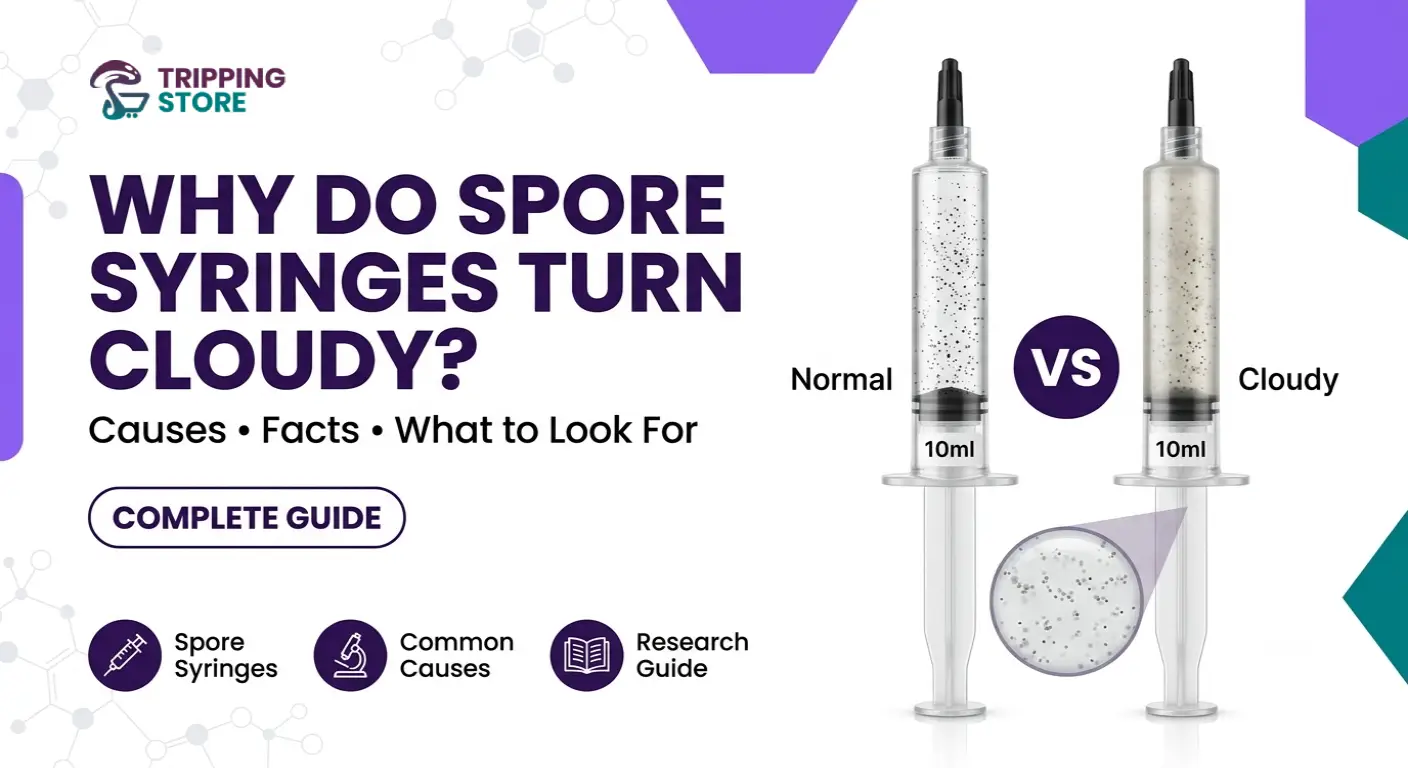
A spore syringe can turn cloudy for two very different reasons. Sometimes it's harmless — a very high spore count naturally makes the liquid look a bit hazy, especially in a double-density suspension. Other times, cloudiness is a warning sign of bacterial contamination, especially if it comes with a bad smell, a change in colour, or fizzing. The main clue is smell and texture: a strong sour or rotten smell almost always means contamination, while a syringe that still smells neutral is more likely just naturally spore-dense. This guide explains how to tell the difference and what to do next.2Main reasons a syringe turns cloudy
SmellThe most reliable warning sign
FixedSpore prints per batch, giving a consistent double-density mix
2–8°CCorrect storage temperature
Jump to a section
1. Reason One: Just a Lot of Spores
2. Reason Two: Contamination
3. How to Tell Them Apart
4. What to Do Next
5. How to Prevent Contamination
FAQ1. Reason One: It's Just a Lot of Spores
The most common, harmless reason a syringe looks cloudy is simply that it has a high spore count. A double-density suspension — the standard type most UK suppliers use — can carry 300,000 to 500,000 spores per millilitre. That many tiny particles floating in water naturally makes the liquid look hazy or slightly cloudy, especially when you shake it.
ℹ️ Key Fact — A naturally cloudy syringe from spore density alone should still smell neutral, look consistent throughout, and settle into a visible layer at the bottom when left still for a while. That settling is actually a good sign — it means real spore material is present.
2. Reason Two: Contamination
The less good reason for cloudiness is bacterial contamination — unwanted bacteria growing in the liquid. This usually looks and smells noticeably different from a simply spore-dense syringe.
👃
Bad Smell
A sour, rotten, or "off" smell is one of the clearest signs of bacterial contamination. A normal syringe should smell neutral.
🫧
Fizzing or Bubbles
Unusual bubbling, especially without shaking, can be a sign that bacteria are actively growing and producing gas.
🎨
Colour Change
A shift toward yellow, green, pink, or an unusual colour (rather than the expected dark purple-brown tint) suggests contamination.
🧵
Stringy or Clumpy Texture
Visible strands, clumps, or a texture that looks different from smooth, evenly distributed liquid can point to unwanted growth.3. How to Tell Them Apart
| Sign | Just Spore-Dense | Contaminated |
|---|---|---|
| Smell | Neutral | Sour or rotten |
| Colour | Consistent purple-brown tint | Yellow, green, pink, or unusual |
| Texture | Smooth, evenly mixed | Stringy, clumpy, or fizzing |
| Settling behaviour | Settles into a clear layer over time | May not settle normally, or looks uneven |
✅ Quick Check — If your syringe still smells neutral and just looks a bit hazy, it's most likely fine. If you notice a bad smell, unusual colour, or fizzing, treat it as contaminated.
4. What to Do Next
If you're confident the cloudiness is just from a high spore count, there's nothing to do — carry on using it as normal, giving it a gentle shake before each use to redistribute the spores evenly.
⚠️ If You Suspect Contamination — Don't use the syringe for further slide preparation. A contaminated sample won't give you reliable results under the microscope, and continuing to use contaminated equipment risks spreading the problem to other tools and future slides. It's best to discard it.
5. How to Prevent Contamination
Good storage and handling habits are the best way to avoid contamination in the first place.| Habit | Why It Helps |
|---|---|
| Store at 2–8°C, never frozen | Correct temperature keeps unwanted microbial growth to a minimum |
| Keep the needle capped when not in use | Reduces how much air (and airborne contaminants) reaches the liquid |
| Wipe the syringe exterior before use | Keeps external dirt or bacteria from being introduced when handling it |
| Avoid touching the needle tip | Skin naturally carries bacteria that can enter the syringe |
Ready to Start Your Research?
Every TrippingStore spore syringe is prepared under sterile conditions in the UK, giving you a clean, reliable starting sample with a naturally dense, safe suspension.Frequently Asked Questions
QWhy has my spore syringe turned cloudy?
Usually one of two reasons: a high spore count naturally making the liquid look hazy, which is harmless, or bacterial contamination, which is not. Smell is the best way to tell them apart.
QIs a cloudy syringe always contaminated?
No. A double-density syringe with a high spore count often looks naturally hazy or cloudy, especially when shaken. This is normal and doesn't mean anything is wrong.
QHow can I tell if my syringe is contaminated?
Check for a sour or rotten smell, unusual colour like yellow, green, or pink, fizzing or bubbling, or a stringy, clumpy texture. Any of these suggest contamination.
QShould I use a syringe if I think it's contaminated?
No. Don't use it for further slide preparation. A contaminated sample won't give reliable results, and it's best to discard it rather than risk spreading the problem.
QDoes shaking a syringe make it look more cloudy?
Yes, this is normal. Shaking redistributes settled spores evenly through the liquid, which can temporarily make it look more hazy, especially in a high-density suspension.
QWhat causes contamination in a spore syringe?
Contaminants have to get into a syringe before they can grow. They can arrive with the spores when the syringe is made, or get in later during handling, for example if the needle tip is touched or left uncapped too long. Storage temperature doesn't bring contamination in, but warmth lets anything already inside grow faster, which is one reason syringes are kept in the fridge at 2–8°C.
QShould spores settle at the bottom of the syringe over time?
Yes. Spores naturally settle into a visible layer when a syringe is left still, which is a good sign that real spore material is present rather than something else causing the cloudiness.