
⚖️ UK Legal Notice: This guide is for learning and research only. Psilocybe cubensis spores do not have psilocybin or psilocin in them, so they are legal to buy in the UK for research under a microscope. Growing spores into full mushrooms is against the law under the Misuse of Drugs Act 1971. Always follow UK law. See our 2026 UK Legal Guide for more.
⚡ Quick Answer
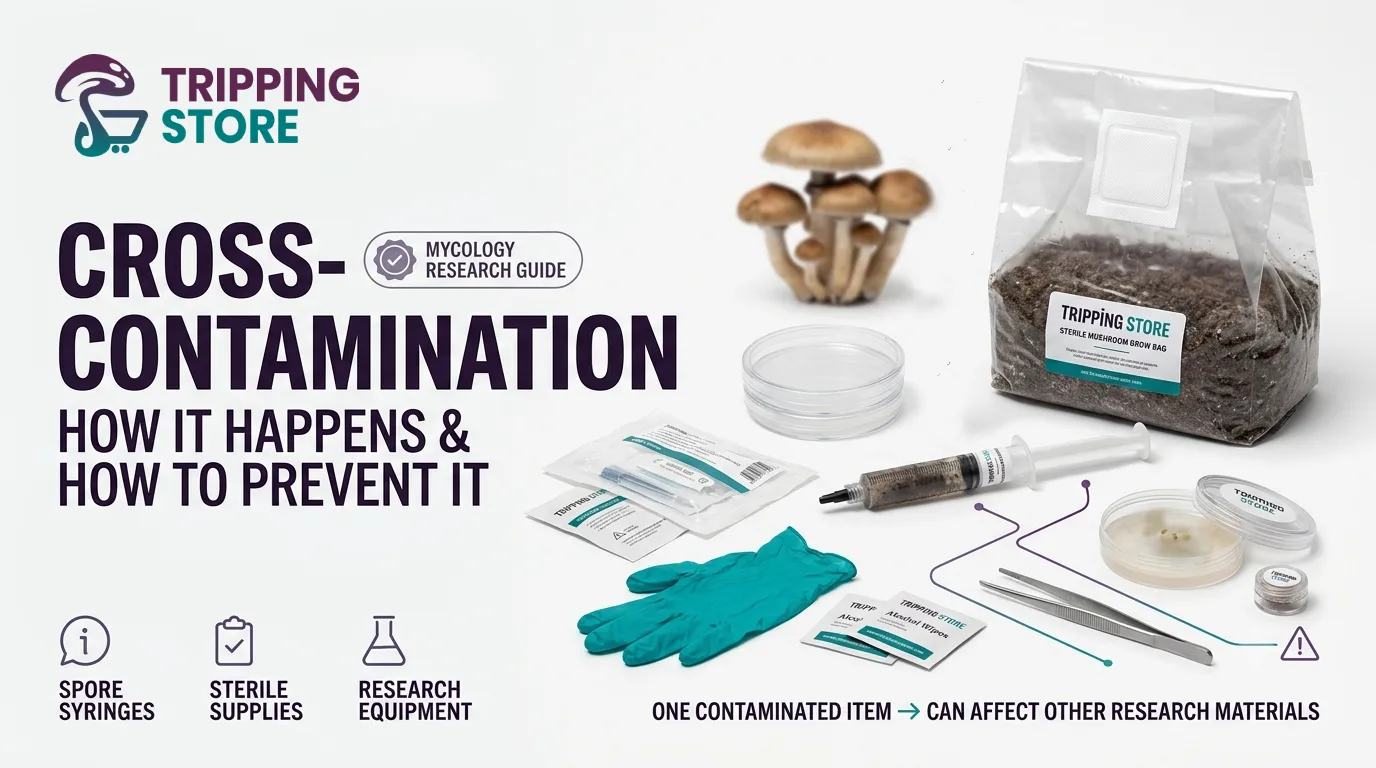
Cross-contamination happens when material from one sample — like bacteria, mould spores, or even a different strain — ends up in another sample by accident, usually through a shared tool, dirty surface, or careless handling. It's different from general contamination in the air, because the source is something you actually touched or used, not just something floating around. The main ways to prevent it: clean and sterilise tools between every sample, never reuse a tool without cleaning it, and keep different strains and samples clearly separated while you work. This guide explains exactly how it happens and how to stop it.3Most common causes of cross-contamination
1Tool should equal 1 sample, then clean
70%Isopropyl alcohol strength for cleaning
10–15sTime to flame-sterilise a metal tool
Jump to a section
1. What Is Cross-Contamination, Exactly?
2. How It Actually Happens
3. How to Prevent It
4. Keeping Strains and Samples Separate
5. How to Spot It After It's Happened
FAQ1. What Is Cross-Contamination, Exactly?
Cross-contamination is when unwanted material moves from one sample to another because of something you did — not just because germs happened to land there from the air. It's a specific, avoidable kind of contamination, which is exactly why good technique makes such a big difference.
ℹ️ Key Difference — Regular airborne contamination happens because a container was open too long. Cross-contamination happens because a tool, surface, or your hands carried something from one sample directly to another.
2. How It Actually Happens
🔧
Reusing a Dirty Tool
Using the same scoop, needle, or tool on two different samples without cleaning it in between is one of the most common causes.
🖐️
Touching Multiple Samples
Handling one sample, then touching another without washing or cleaning your hands in between, can carry material across.
🪑
An Unwiped Work Surface
If a surface was used for one sample and not cleaned before the next, leftover material can transfer to whatever touches it next.
📦
Poor Sample Organisation
Working with multiple open samples at once, without a clear system for keeping them apart, makes accidental mixing far more likely.3. How to Prevent It
1
One tool, one sample — Use a separate tool for each sample, or clean and sterilise the same tool fully before moving to the next.
2
Clean between every sample, not just at the end — Wipe surfaces with 70% isopropyl alcohol and let it dry before starting the next sample.
3
Flame-sterilise metal tools — Hold the tool in a flame for 10–15 seconds until it briefly glows, then let it cool fully before it touches anything.
4
Work with one sample open at a time — Finish with one sample, seal it, and clean up before opening the next.
5
Wash or wipe your hands between samples — Even brief contact with your hands can carry material from one sample to the next.
✅ Simple Rule of Thumb — If a tool, surface, or your hands have touched one sample, treat them as "dirty" for every other sample until they've been properly cleaned. This one habit prevents most cross-contamination on its own.
4. Keeping Strains and Samples Separate
Cross-contamination between strains — not just between clean and contaminated material — is worth thinking about too. Mixing up which spores came from which strain can mess up your research just as much as bacterial contamination.| Habit | Why It Helps |
|---|---|
| Label everything clearly with strain and date | Removes any doubt about which sample is which |
| Work on one strain at a time | Reduces the chance of mixing up tools or samples between strains |
| Store different strains apart in the fridge | Makes accidental mix-ups at storage time less likely |
| Use separate tools per strain where possible | Removes the need to remember whether a tool was cleaned properly |
5. How to Spot It After It's Happened
Sometimes you won't know cross-contamination happened until you look under the microscope or notice something off later.
⚠️ Warning Signs — Spores that look noticeably different in size or shape from what you'd expect for that strain, a syringe developing a bad smell or unusual colour, or a sample behaving unexpectedly compared to your other syringes of the same strain, can all point to cross-contamination.
If you suspect it's happened, it's best to treat that sample as unreliable rather than trying to work around the problem — discard it and start fresh with proper technique.Ready to Get Started?
Every TrippingStore spore syringe is prepared under sterile conditions in the UK, giving you a clean starting point — good technique at home keeps it that way through every sample you prepare.Frequently Asked Questions
QWhat is cross-contamination, and how is it different from regular contamination?
Cross-contamination happens when material moves from one sample to another because of a shared tool, surface, or your hands — not just from germs floating in the air.
QWhat's the most common cause of cross-contamination?
Reusing a tool, like a scoop or needle, on two different samples without cleaning it properly in between.
QHow do I prevent cross-contamination between samples?
Use one tool per sample or clean it fully between uses, wipe surfaces with 70% isopropyl alcohol between samples, and work with only one sample open at a time.
QCan cross-contamination happen between different strains, not just contamination?
Yes. Mixing up which spores came from which strain, for example through a shared tool, can compromise your research just as much as bacterial contamination.
QHow do I know if cross-contamination has happened?
Warning signs include spores that look different than expected for that strain, an unusual smell or colour in a syringe, or a sample behaving differently from other syringes of the same strain.
QShould I keep working with a sample I think has been cross-contaminated?
No. It's best to treat that sample as unreliable, discard it, and start fresh with proper technique rather than trying to work around the problem.
QDo I need separate tools for every strain I work with?
It's not strictly necessary if you clean thoroughly between samples, but using separate tools per strain removes the risk of forgetting a cleaning step.