
What Is a Spore Syringe? Complete Beginner Guide (2026)
If you’re exploring the fascinating world of mycology, you’ve probably encountered the term spore syringe. For beginners, the phrase can sound technical, but the concept is actually simple. A spore syringe is one of the most common tools used in mushroom research, microscopy, and cultivation studies.In this comprehensive guide, you’ll learn:
- What a spore syringe is
- What it contains
- How it works
- How it differs from liquid culture
- How it’s used in mycology research
- How to store it properly
By the end of this article, you’ll have a clear understanding of why spore syringes are so popular in the world of fungal research and mushroom cultivation studies.
What Is a Spore Syringe?
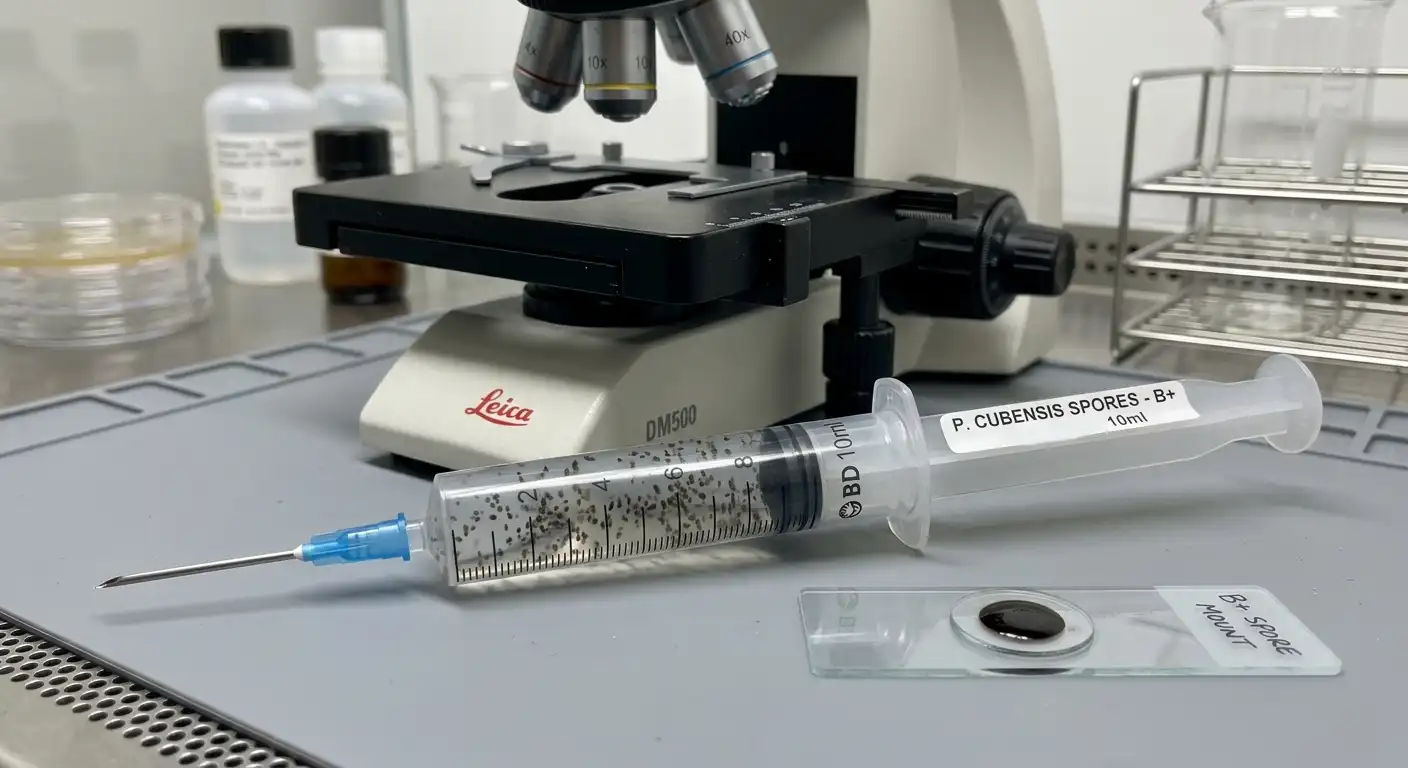
A spore syringe is a sterile syringe filled with a liquid solution containing microscopic mushroom spores suspended in water.
These spores are the reproductive cells of mushrooms. They function similarly to seeds in plants, allowing fungi to reproduce and spread under the right environmental conditions.
Inside the syringe, the spores remain dormant because they are suspended in sterile distilled water that contains no nutrients. Without nutrients, the spores cannot germinate or grow until they are introduced to a suitable environment.
A typical spore syringe usually contains:
- Sterile syringe body
- Sterile distilled water
- Millions of microscopic mushroom spores
- A sterile cap or needle attachment
When you look at a spore syringe, you may notice small dark or cloudy specks floating in the liquid. These are clusters of spores.
What Are Mushroom Spores?
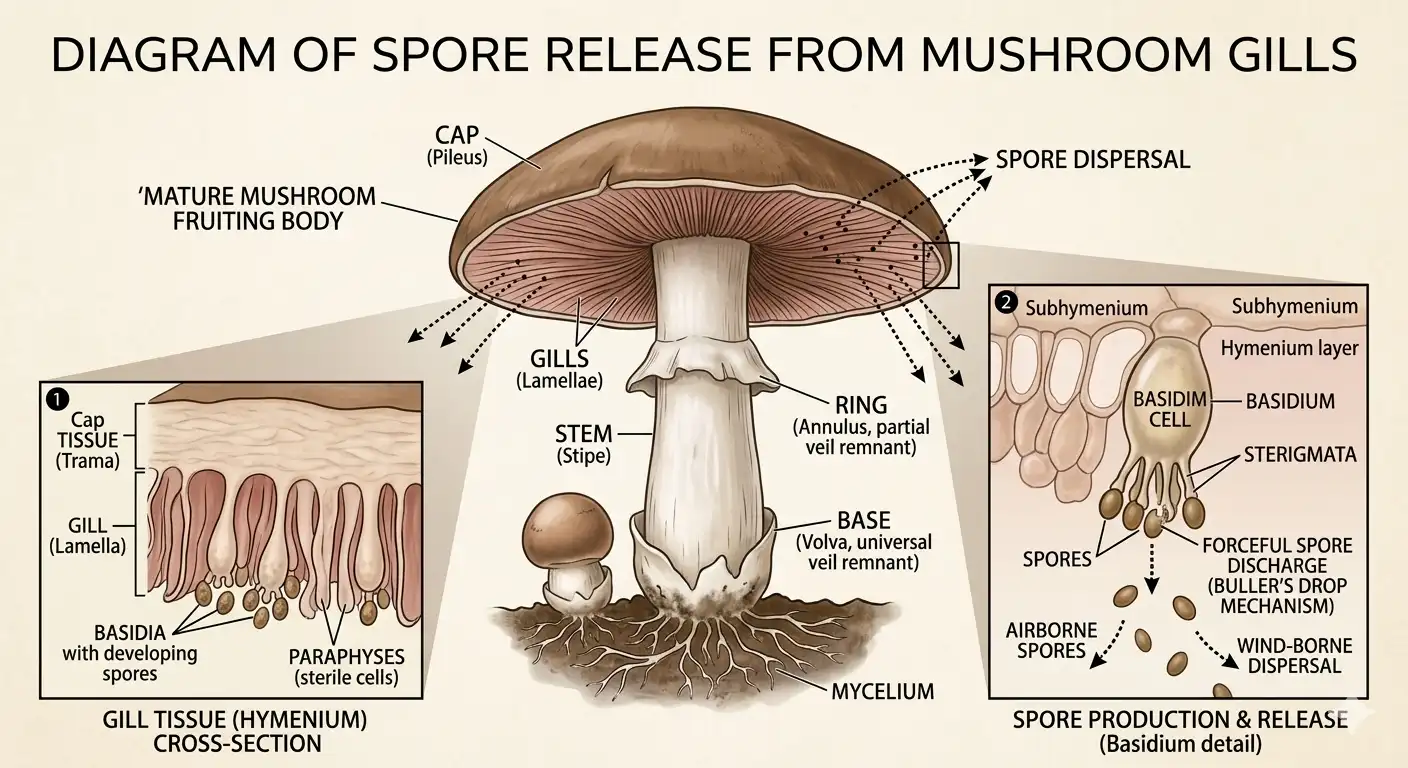 To understand spore syringes, it helps to understand mushroom spores.
Mushrooms are the fruiting bodies of fungi. Their primary purpose is reproduction. The underside of a mushroom cap contains structures that release millions of microscopic spores into the environment.
When these spores land on a suitable surface with the right temperature and nutrients, they can germinate and form mycelium, the root-like network that eventually produces mushrooms.
This natural lifecycle is why spores are so important for mycology research.
What Is Inside a Spore Syringe?
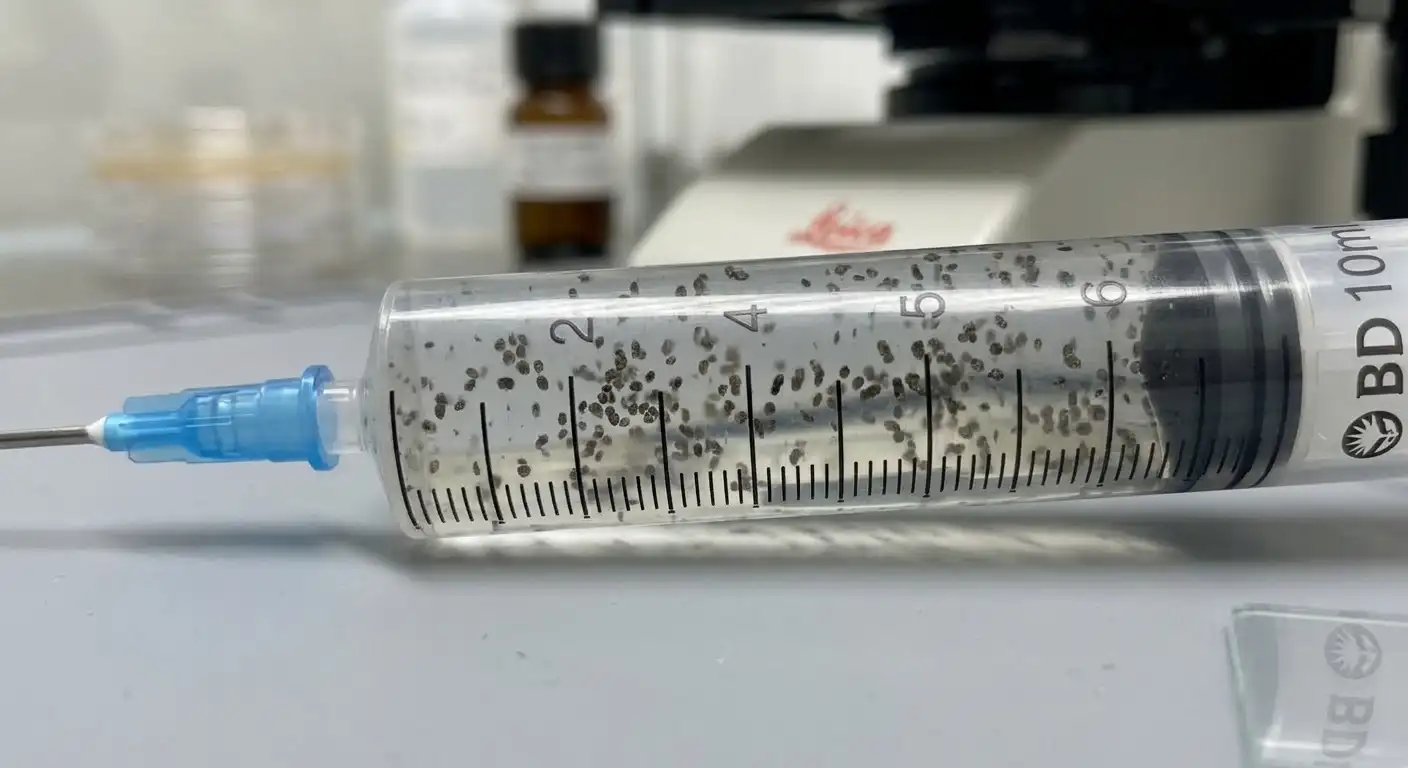 Although the name suggests something complex, a spore syringe contains only a few simple components.
- Sterile Water: The liquid inside a spore syringe is usually distilled sterile water. This ensures that bacteria or other contaminants do not grow inside the syringe.
- Mushroom Spores: Millions of microscopic spores are suspended in the liquid. These spores remain inactive until introduced to a suitable growth medium.
- Sterile Syringe Body: The syringe itself acts as a precise delivery tool, allowing researchers to distribute spores in controlled amounts.
Because the solution contains no nutrients, spores remain dormant and can stay viable for many months when stored properly.
What Are Spore Syringes Used For?
Spore syringes have several applications in mycology and fungal research.
1. Microscopy Research
One of the most common uses of spore syringes is microscopic observation.
Researchers place a drop of spore solution on a microscope slide to examine characteristics such as:
- Spore shape
- Spore color
- Spore size
- Surface structure
These microscopic traits help scientists identify fungal species.
2. Mycology Education
Spore syringes are widely used in:
- Mycology classes
- Biology research labs
- Amateur fungal studies
Students and enthusiasts use them to observe fungal reproduction and lifecycle processes.
3. Mushroom Cultivation Research
Spore syringes are also used in mushroom cultivation studies because they allow spores to be distributed evenly onto a substrate.
Once spores reach a nutrient-rich environment, they can germinate and develop into mycelium, which eventually produces mushrooms.
How Does a Spore Syringe Work?
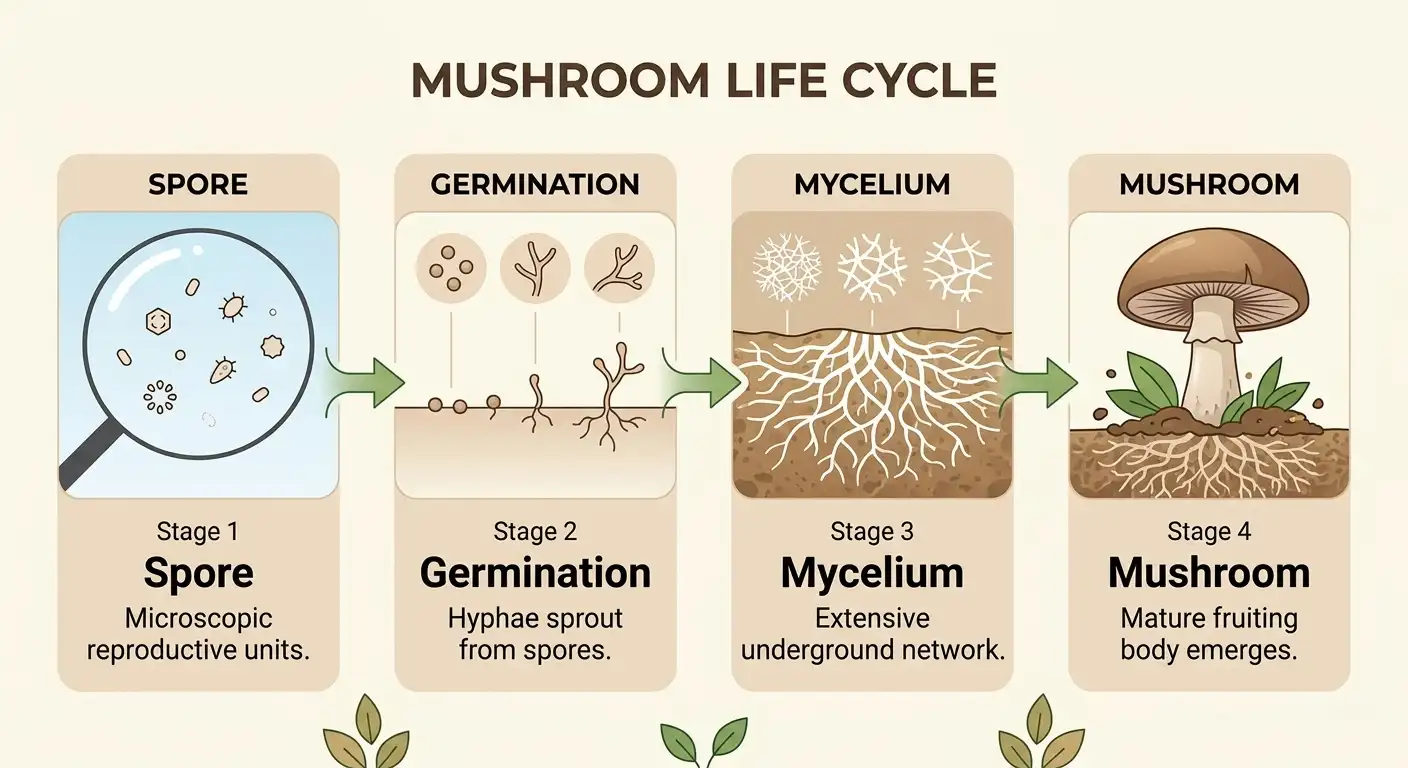 The process behind spore syringes follows the natural fungal lifecycle.
- Step 1- Spores Are Suspended in Water: Spores collected from a mature mushroom are mixed with sterile water.
- Step 2- Spores Remain Dormant: Because the water contains no nutrients, spores remain inactive.
- Step 3- Spores Are Introduced to a Medium: When introduced to a nutrient source, spores can germinate and grow.
- Step 4- Mycelium Formation: The spores combine genetic material and develop into mycelium, the vegetative body of a fungus.
- Step 5- Mushroom Growth: Under suitable conditions, the mycelium eventually produces fruiting bodies (mushrooms).
This lifecycle explains why spores are so important in fungal reproduction.
Spore Syringe vs Liquid Culture
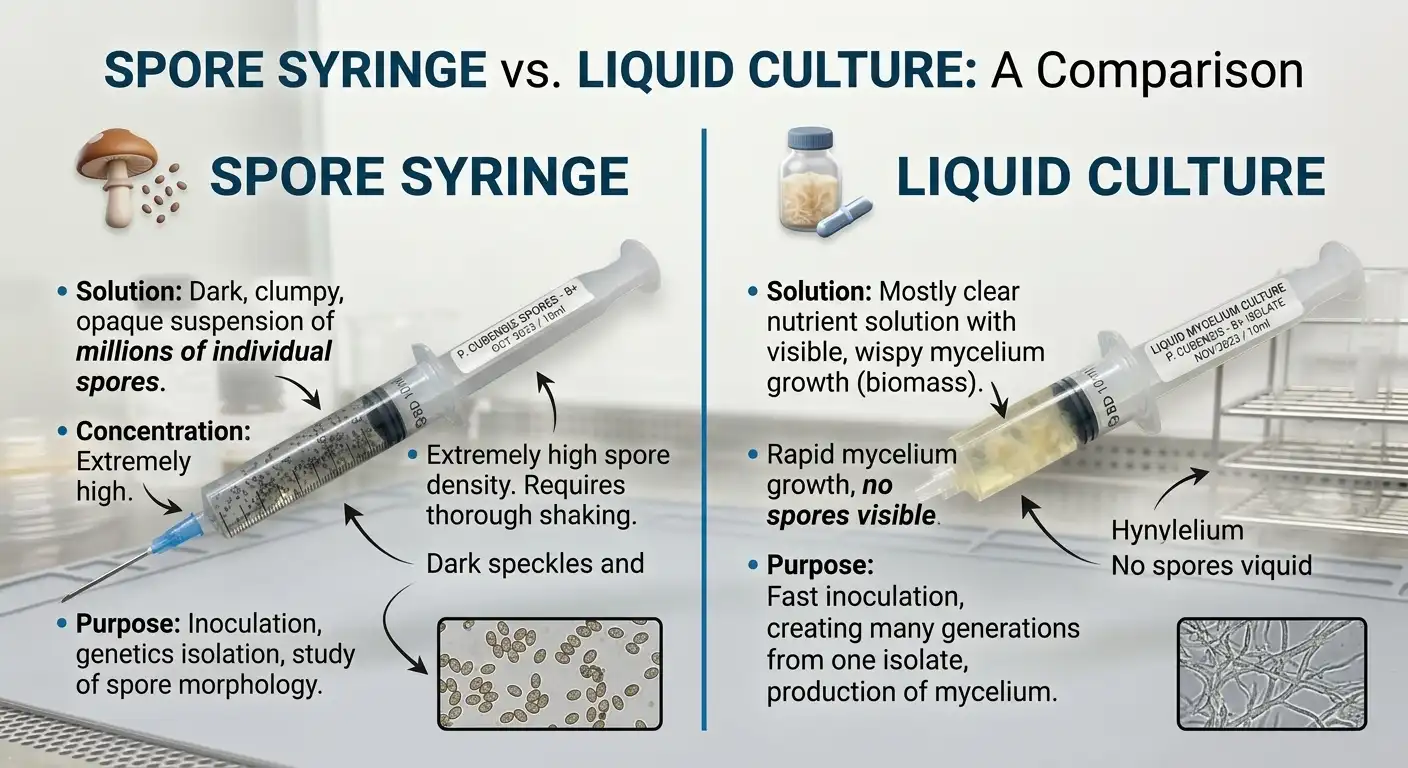 Many beginners confuse spore syringes with liquid culture syringes, but they are very different.
| Feature | Spore Syringe | Liquid Culture |
| Contents | Mushroom spores | Live mycelium |
| Growth stage | Beginning of lifecycle | Already growing |
| Speed | Slower colonization | Faster colonization |
| Genetics | Random variation | Cloned genetics |
| Shelf life | Longer | Shorter |
Spore syringes contain only spores, meaning they must germinate first. Liquid culture syringes contain active mycelium suspended in nutrient liquid.
Because of this, liquid cultures tend to grow faster but are more sensitive to contamination.
Advantages of Spore Syringes
Spore syringes are popular because they offer several advantages.
- Easy to Use: They allow precise delivery of spores with minimal equipment.
- Long Shelf Life: When stored correctly, spore syringes can remain viable for many months or even longer.
- Great for Learning: Starting from spores allows researchers to observe the entire fungal lifecycle.
- Widely Available: Spore syringes are commonly available from research suppliers.
Potential Limitations of Spore Syringes
Although useful, spore syringes have a few limitations.
Slower Growth
Spores must germinate before forming mycelium, which takes time.
Genetic Variability
Each spore contains different genetics, meaning results may vary.
Risk of Contamination
Spores collected from mushrooms may contain microscopic contaminants.
Because of these factors, many researchers test spores on agar plates before further experimentation.
How to Store a Spore Syringe
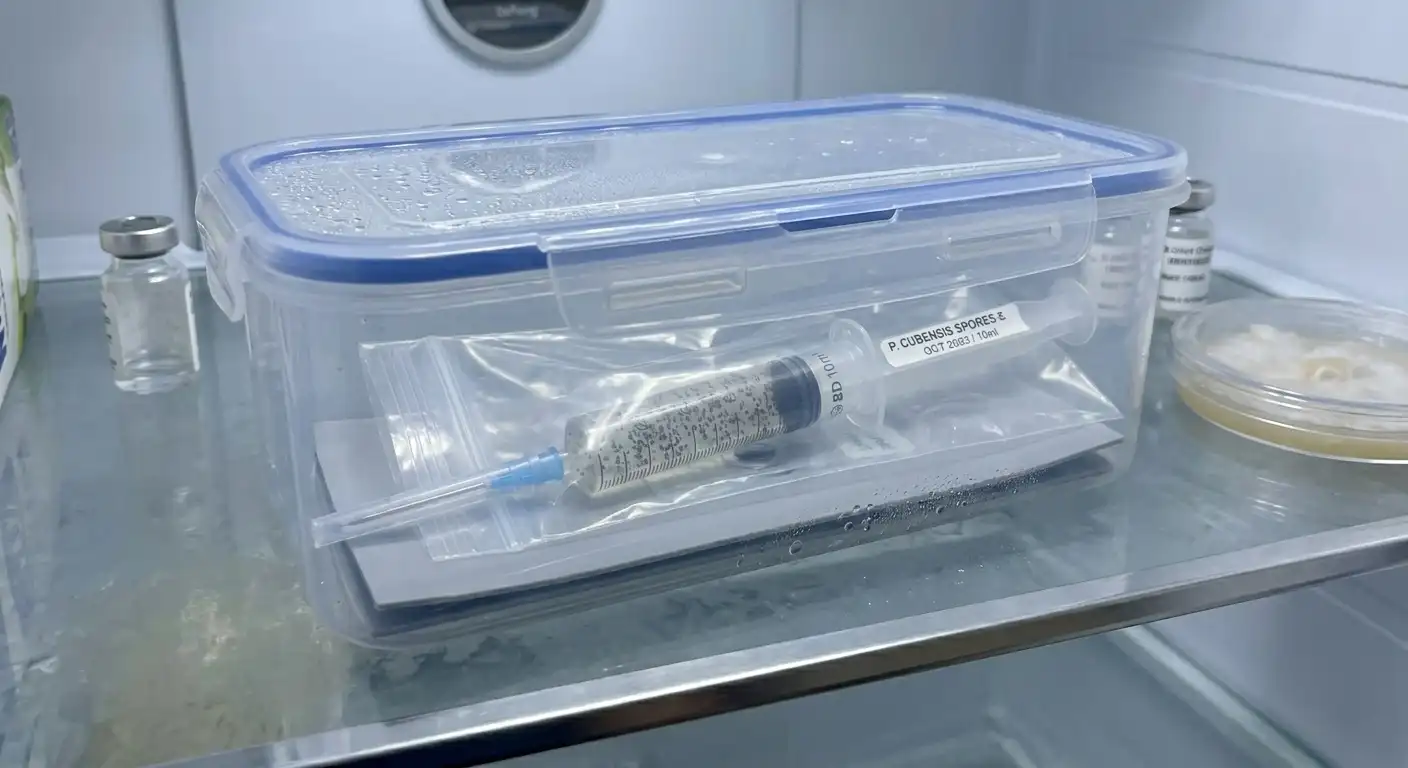 Proper storage is essential to maintain spore viability.
Follow these tips:
Keep it refrigerated
Cold temperatures slow down degradation.
Avoid direct sunlight
UV light can damage spores.
Store in a sealed bag or container
This prevents contamination and moisture exposure.
Do not freeze
Freezing can damage the spores.
When stored correctly, spore syringes can remain viable for months or even years.
Beginner Tips for Working With Spore Syringes
If you are new to mycology research, these tips can help.
- Shake Before Use: Spores may clump together, so shaking the syringe distributes them evenly.
- Work in a Clean Environment: Sterility is extremely important in fungal research.
- Use Sterile Equipment: Always use sterilized needles, containers, and tools.
- Store Properly After Use: If the syringe still contains spores, reseal it and refrigerate.
Final Thoughts
A spore syringe is a simple yet powerful tool in mycology research. By suspending millions of mushroom spores in sterile water, researchers can easily study fungal species, observe spores under microscopes, and explore the lifecycle of fungi.
Because they are easy to use, widely available, and relatively long-lasting, spore syringes remain one of the most popular entry points into mushroom research and cultivation studies.
Whether you are a beginner exploring mycology or an experienced researcher studying fungal genetics, understanding spore syringes is a key step in mastering the fascinating world of fungi.


