
Psilocybin Therapy UK 2026 Clinical Benefits Legal Status and Future of Mental Health
By TrippingStore Editorial Team
Medically Reviewed by Dr Aris Thorne Neurobiology
Last Updated April 2026
Introduction Why Psilocybin Therapy Is Gaining Attention in the UK
Psilocybin therapy is becoming one of the most talked about developments in modern mental health treatment. Once misunderstood, psilocybin is now being researched in controlled clinical environments across the United Kingdom for its potential to treat depression, anxiety, PTSD, and addiction.
Leading institutions such as King’s College London and Imperial College London are actively studying the therapeutic effects of psilocybin. In 2026, the discussion is no longer about whether it works, but how it can be safely integrated into regulated healthcare systems, including potential NHS pathways.
This guide explores the science behind psilocybin therapy, its clinical applications, safety profile, and the evolving legal status in the UK.
What Is Psilocybin and How Does It Work
Psilocybin is a naturally occurring compound found in certain fungal species. When consumed, it is converted into psilocin, the active compound responsible for its psychological effects.
The 5HT2A Receptor and Brain Function
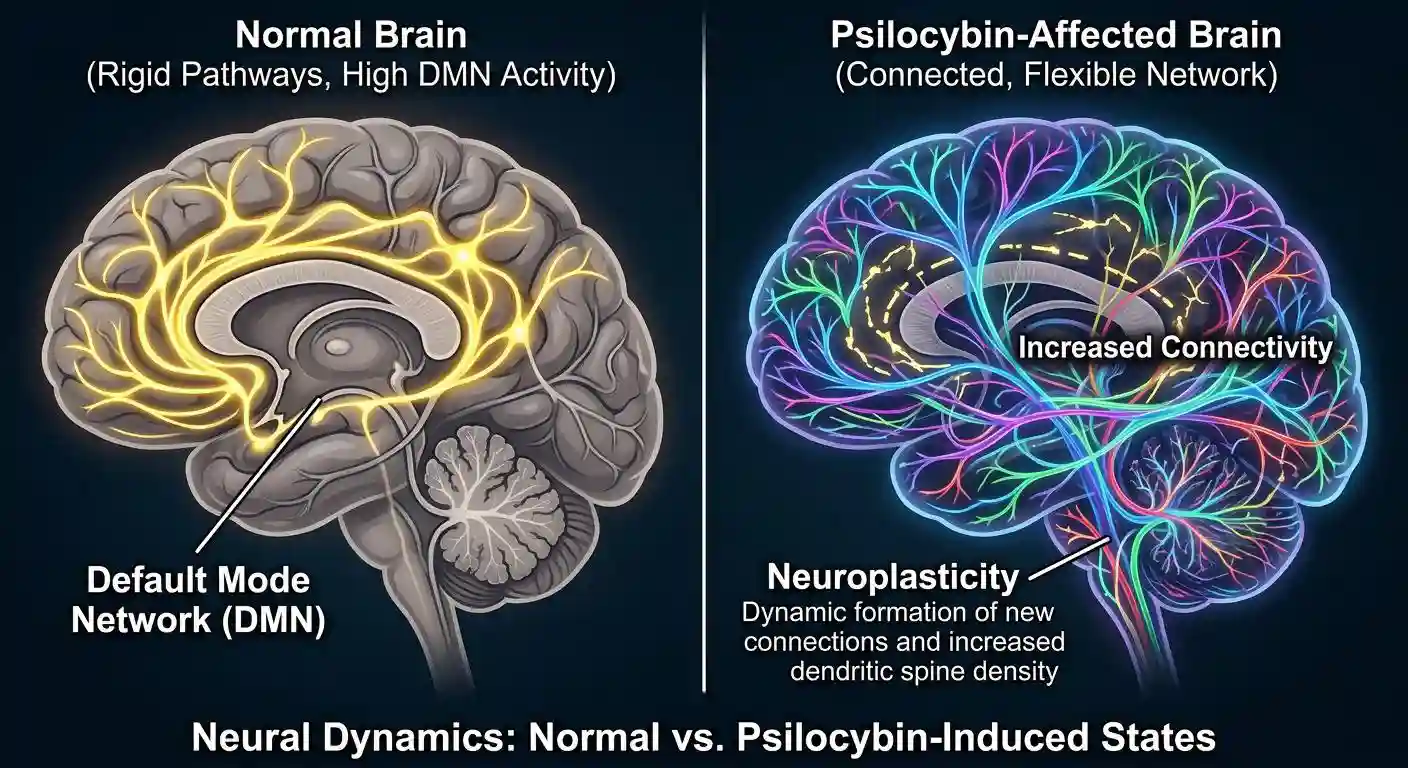
Psilocin interacts with serotonin receptors, particularly the 5HT2A receptors in the brain. This interaction leads to several important neurological changes:
- Reduced activity in the default mode network which is associated with negative thought patterns
- Increased communication between different brain regions leading to new perspectives
- Enhanced neuroplasticity which supports long term behavioural change
These effects allow individuals to temporarily break free from rigid patterns of thinking, making psilocybin a powerful tool in therapeutic settings.
Clinical Applications of Psilocybin Therapy UK
Psilocybin therapy is conducted in a structured clinical setting that includes preparation, guided sessions, and integration support.
Psilocybin Therapy for Depression
Clinical studies in the UK have shown that individuals with treatment resistant depression may experience improvements within 24 to 48 hours after a guided session. In many cases, benefits can last for several months.
Psilocybin for Anxiety and End of Life Care
Psilocybin has demonstrated promising results in helping patients facing terminal illness. It can reduce fear of death and improve emotional wellbeing.
Psilocybin and Addiction Treatment
Research suggests psilocybin may help disrupt harmful patterns associated with addiction. Early studies indicate success in treating nicotine and alcohol dependence.
Psilocybin Therapy vs Traditional Antidepressants
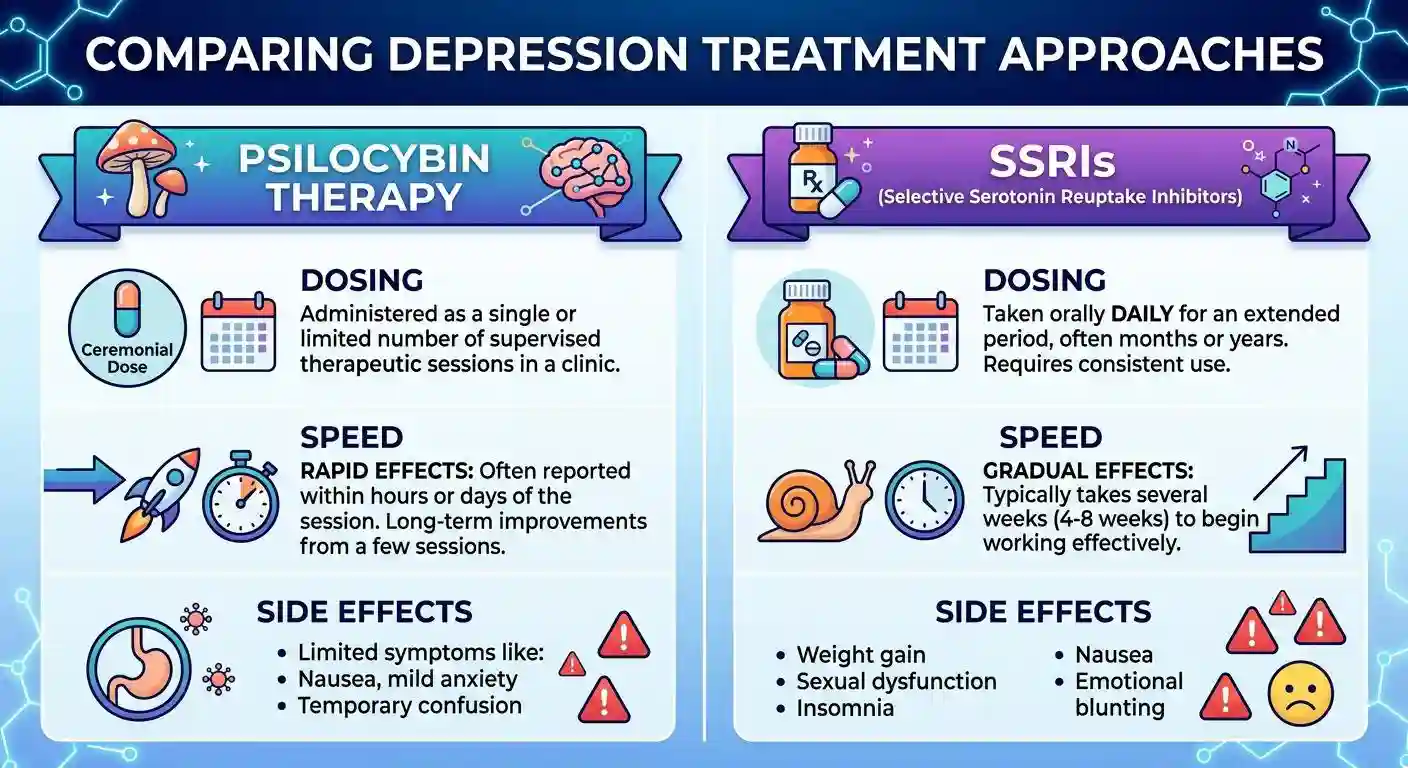
Feature | Psilocybin Therapy | SSRIs |
Dosing | One to three guided sessions | Daily medication |
Onset | Rapid within 24 to 48 hours | Several weeks |
Approach | Addresses root causes | Manages symptoms |
Side Effects | Short term and controlled | Potential long term effects |
Goal | Long term change | Ongoing treatment |
Is Psilocybin Therapy Safe
When used in controlled clinical environments, psilocybin has a strong safety profile.
Potential Risks
Unsupervised use may lead to psychological discomfort or temporary increases in heart rate. In rare cases, individuals may experience persistent visual disturbances.
Who Should Avoid Psilocybin
Psilocybin is not recommended for individuals with a history of psychosis or schizophrenia. It should also be avoided by those taking certain medications such as MAOIs or lithium.
Proper screening and professional supervision are essential for safe use.
Psilocybin Therapy UK Legal Status 2026
Psilocybin is currently classified as a Schedule 1 substance under UK law. This means it is restricted to approved clinical research settings.
However, the legal landscape is evolving. The Medicines and Healthcare products Regulatory Agency is reviewing ongoing clinical data, and there is growing discussion about rescheduling psilocybin for medical use.
At present:
- Psilocybin therapy is only available in clinical trials
- Research access is increasing
- NHS integration is being explored
Importantly, psilocybin spores are legal in the UK when intended for microscopy and research purposes only, with no intent for cultivation.
Psilocybe Cubensis Research and Microscopy in the UK
Much of the scientific interest in psilocybin originates from species such as Psilocybe Cubensis. These are widely studied in mycology for their structure and genetic properties.
In the UK, microscopy research allows individuals to study spores in a legal context. This includes examining:
- Spore structure and morphology
- Genetic variation across strains
- Classification of fungal species
Microscopy based research plays an important role in advancing understanding within mycology.
The Future of Psychedelic Therapy in the UK
The future of psilocybin therapy in the UK is focused on regulated, science led integration into mental health care.
Key developments expected include:
- Standardised clinical protocols
- Licensed treatment centres
- Greater acceptance within mainstream medicine
- Potential NHS adoption
As research continues, the UK is positioned to become a leading centre for psychedelic medicine.
Medical Disclaimer
This content is for educational and research purposes only and does not constitute medical advice. Always consult a qualified healthcare professional before making decisions related to mental health or treatment.


