
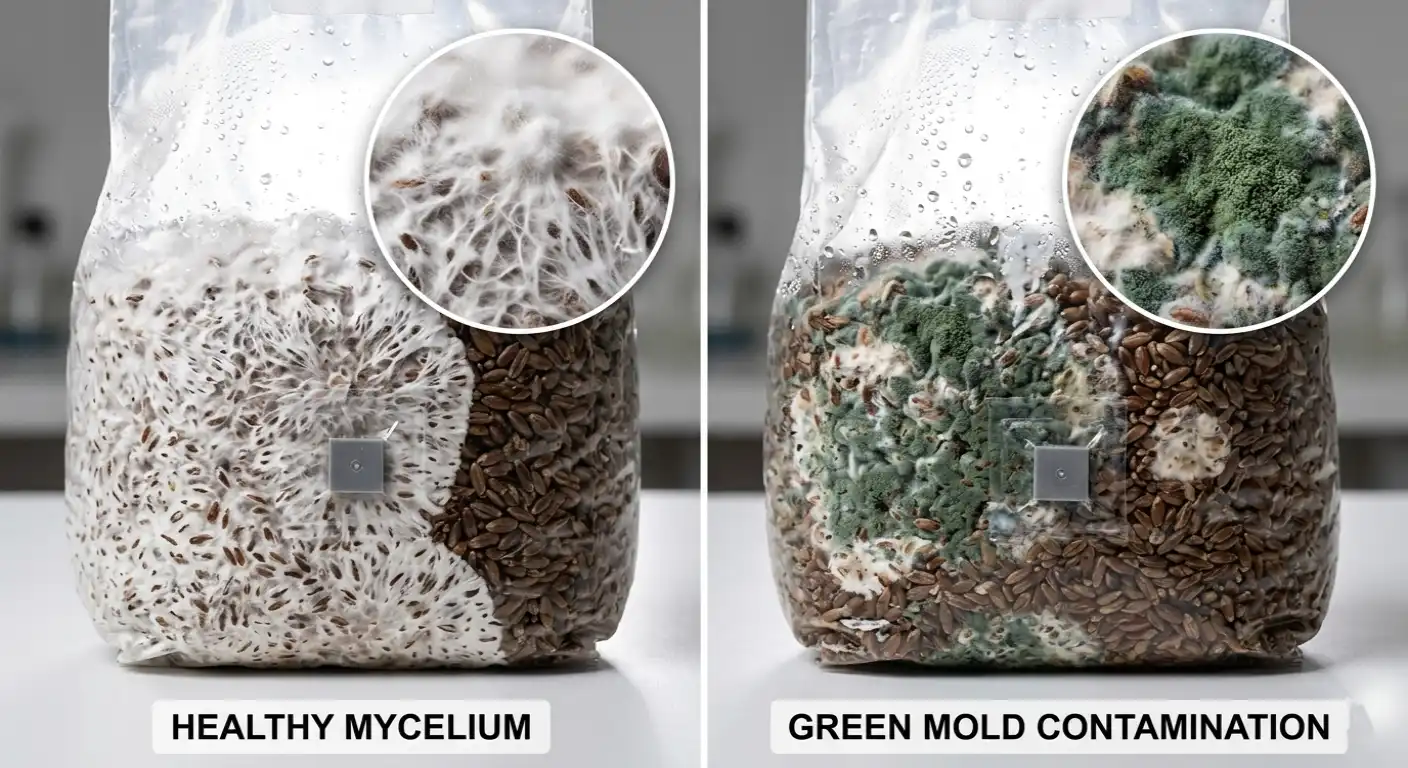
Mycelium vs Mold – How to Spot Contamination in Grow Bags (2026 Guide)
Growing mushrooms can be incredibly rewarding—but contamination is one of the biggest reasons growers fail. If you’ve ever looked at your grow bag and wondered “Is this healthy growth or something bad?”, understanding mycelium vs mold is essential.
Using high-quality spore syringes and sterile grow bags can significantly reduce contamination risk right from the start, but knowing how to identify problems early is what truly protects your harvest.
What Is Mycelium?
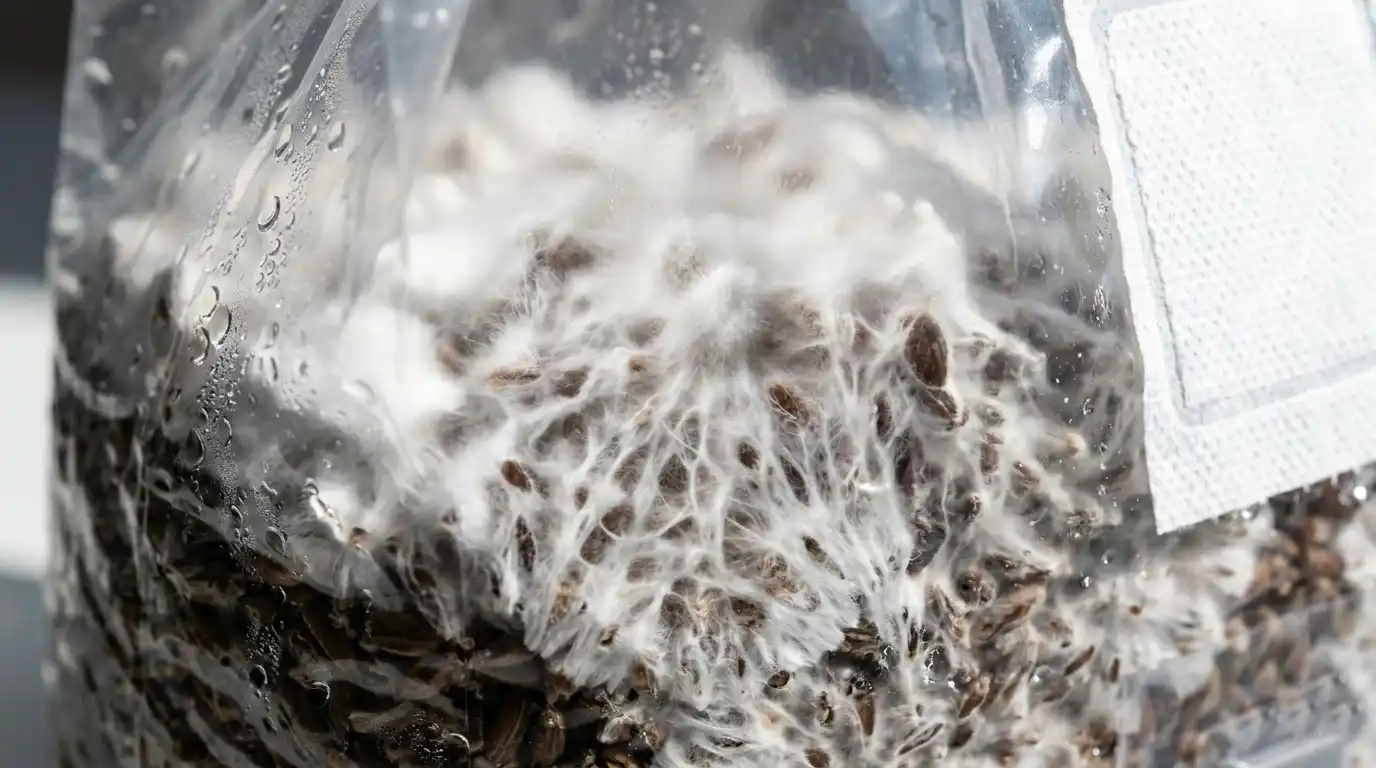
Mycelium is the vegetative part of fungi—the foundation of mushroom growth. It spreads through your substrate and eventually produces mushrooms.
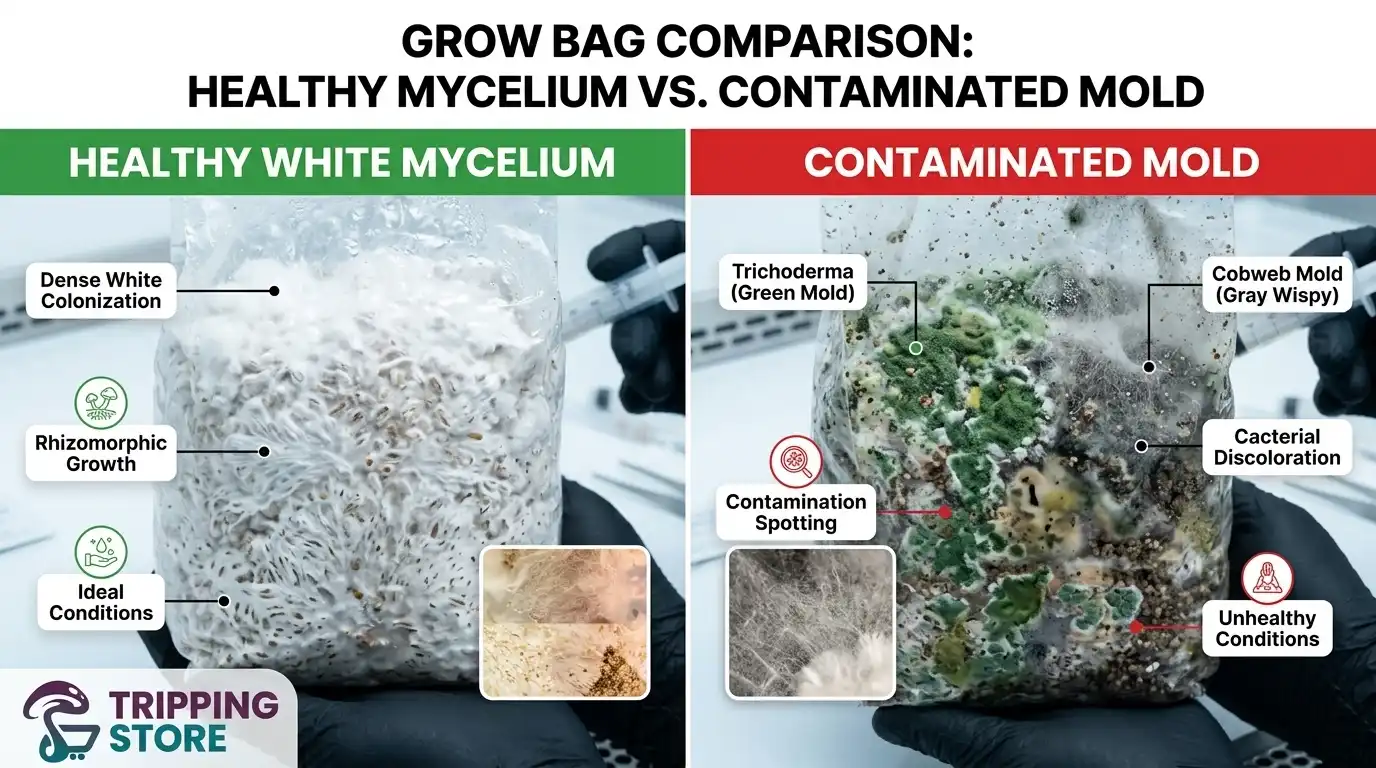
Healthy Mycelium Looks Like:
- Bright white and clean
- Fluffy or cotton-like texture
- Sometimes rope-like (rhizomorphic growth)
- Even, steady spread
- Fresh, earthy smell
Healthy mycelium means your grow is on the right track.
What Is Mold (Contamination)?
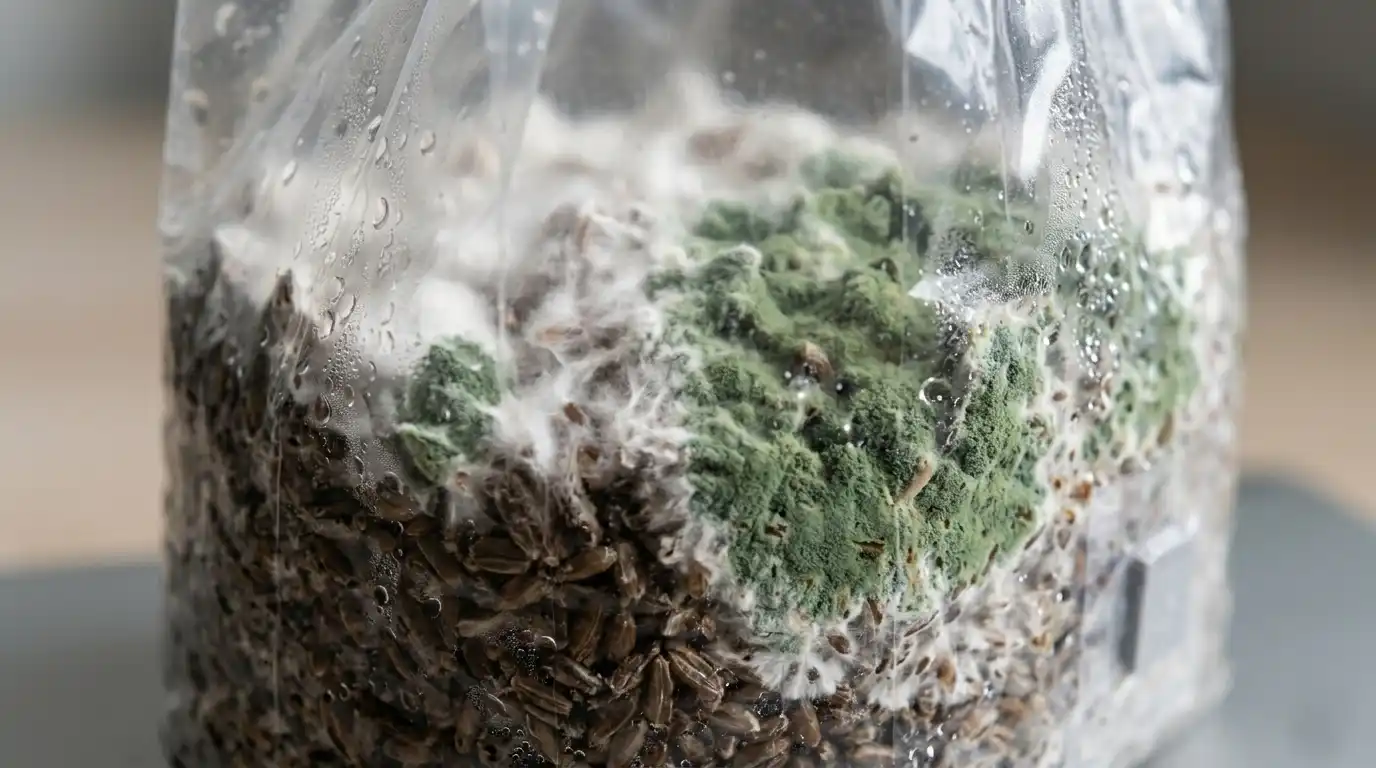
Mold is unwanted fungal or bacterial growth that competes with mycelium and can destroy your grow bag.
This often happens due to:
- Poor sterilization
- Low-quality materials
- Improper handling
That’s why using injection port grow bags is highly recommended—they reduce exposure to contaminants during inoculation.
Mycelium vs Mold: Key Differences
| Feature | Mycelium ✅ | Mold ❌ |
| Color | Pure white | Green, black, gray, yellow |
| Texture | Fluffy or ropey | Powdery, slimy, dusty |
| Growth Pattern | Even and controlled | Fast and aggressive |
| Smell | Earthy, fresh | Sour, rotten |
| Spread Speed | Steady | Rapid |
How to Spot Contamination in Grow Bags
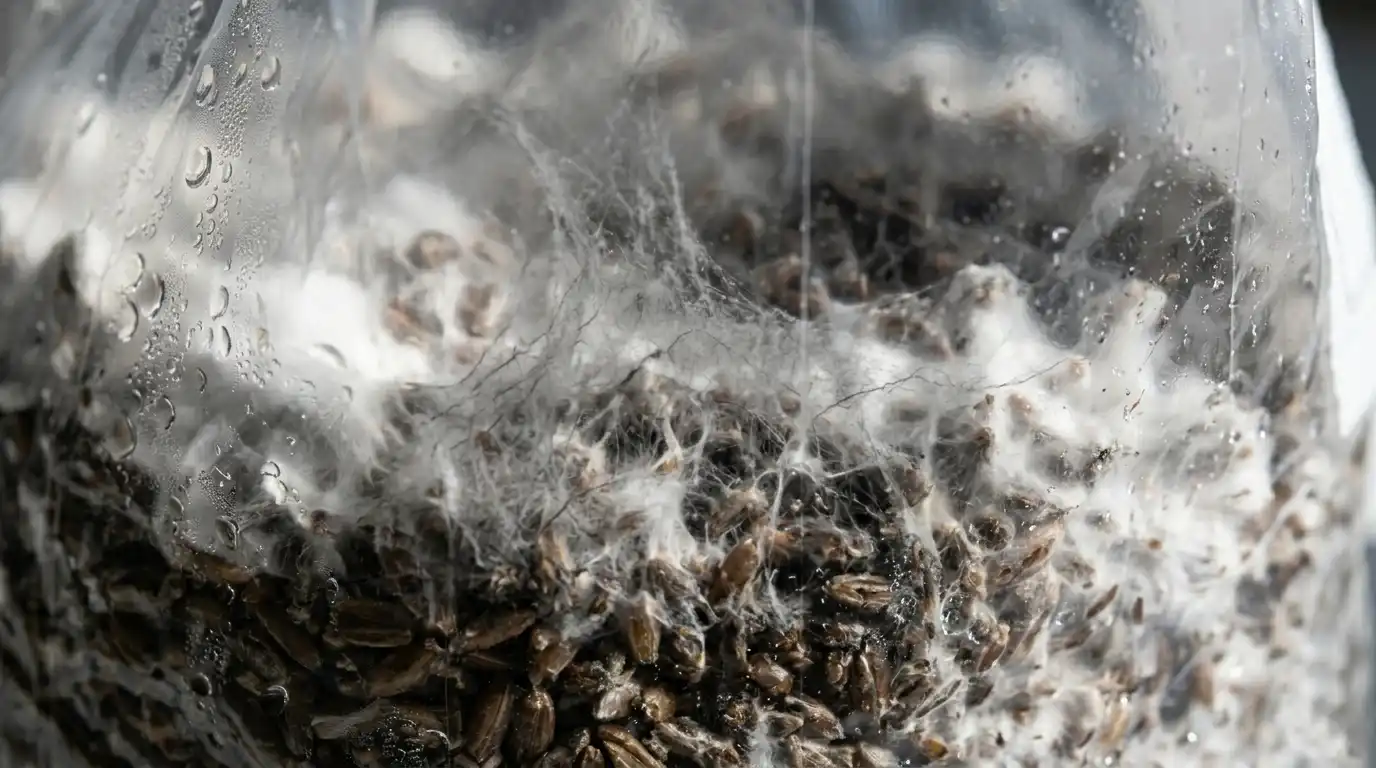
1. Color Changes
Healthy mycelium stays white. If you see:
- Green → mold (Trichoderma)
- Yellow → stress or bacteria
- Black → severe contamination
Color change is usually the first warning sign.
2. Growth Pattern
Mycelium grows evenly across the substrate. Mold grows:
- Randomly
- In patches
- Very quickly
If something spreads overnight, it’s likely contamination.
3. Texture Differences
- Mycelium → thick, soft, cloud-like
- Mold → thin, dusty, or web-like
Cobweb mold often looks like gray smoke over the surface.
4. Smell Test
Without opening the bag:
- Good → earthy mushroom smell
- Bad → sour, rotten, chemical
Bad smell = contamination in most cases.
5. Excess Moisture
Too much moisture can lead to bacterial contamination:
- Slimy patches
- Wet, sticky substrate
- Pooling liquid
Proper technique and sterile grow bags help maintain the right balance.
Common Beginner Mistakes
Avoid these to reduce contamination risk:
- Opening the grow bag too early
- Not sterilizing hands or tools
- Injecting too much solution
- Growing in an unclean space
- Using low-quality spores
Investing in high-quality spore syringes can make a huge difference in success rate.
What To Do If You Find Mold
Early Stage:
- Isolate the bag immediately
- Do not open indoors
- Monitor closely
Advanced Contamination:
- Dispose of the bag safely
- Clean your grow area
- Start fresh
Never try to save heavily contaminated bags—it’s not worth the risk.
How to Prevent Contamination
Prevention is always easier than fixing the problem.
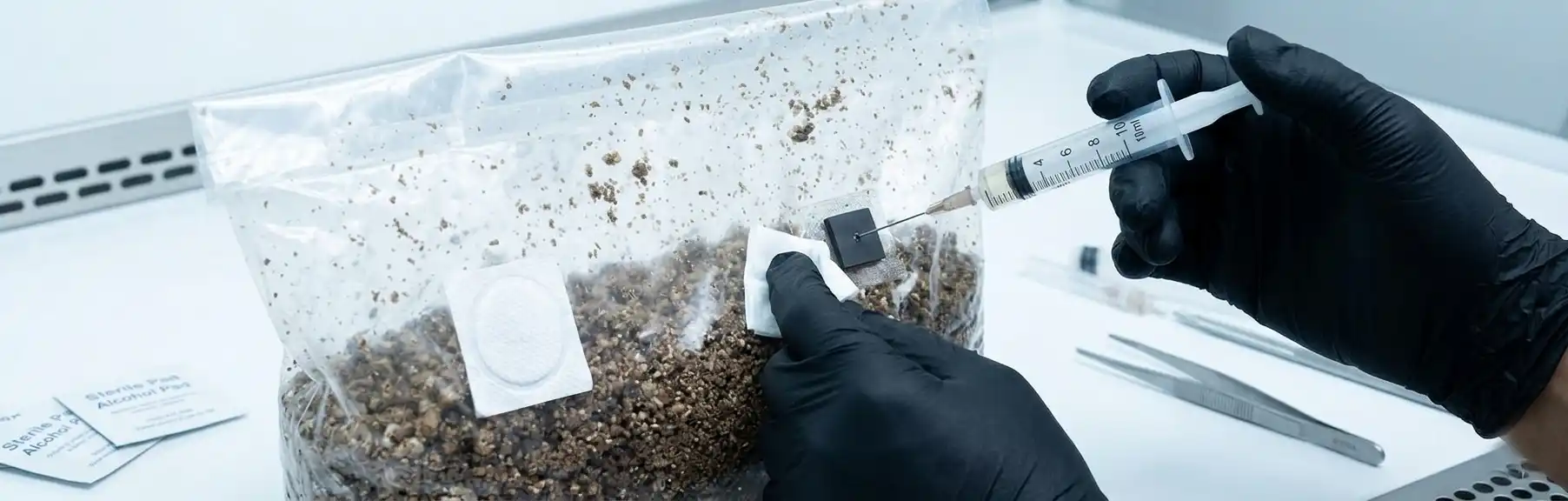
Best Practices:
- Use sterile techniques
- Clean injection ports with alcohol
- Wear gloves when handling
- Avoid unnecessary exposure
- Maintain proper temperature
Many growers upgrade to a monotub cultivation kit once they gain experience, as it offers better control over the growing environment.
Pro Tip (2026 Grower Insight)
Strong mycelium can sometimes resist minor contamination—but only if conditions are perfect. Always prioritize clean technique and quality materials over trying to fix problems later.
Final Thoughts
Understanding mycelium vs mold is one of the most important skills in mushroom cultivation.
Remember:
- White, fluffy growth = healthy
- Colored, fast growth = contamination
The earlier you spot the difference, the higher your chances of a successful harvest.


