Compass Pathways has reported results from both Phase 3 trials of COMP360 psilocybin for treatment-resistant depression. COMP005 and COMP006 each met their main goal: a 25mg dose reduced depression scores more than a low-dose comparator by week six. COMP360 is not an approved treatment. It is unavailable outside a clinical trial, and psilocybin remains Class A in the UK.
What Is COMP360, and How Does It Differ From Magic Mushrooms?
COMP360 is Compass Pathways’ proprietary, manufactured formulation of synthetic psilocybin. It is produced under pharmaceutical manufacturing standards, and every dose given in COMP005 and COMP006 was a measured capsule administered under clinical supervision, with trained staff present throughout the dosing session. It is not the same product as psilocybin mushrooms, fresh or dried, and neither trial involved growing, foraging, or self-administering anything.
Psilocybin, and psilocin (the compound the body converts psilocybin into), are Class A controlled substances under Schedule 2, Part I of the Misuse of Drugs Act 1971. They also sit in Schedule 1 of the Misuse of Drugs Regulations 2001 — the category for substances judged to have no recognised medical use, where even research requires a Home Office licence. A 2005 amendment under Section 21 of the Drugs Act 2005 extended Class A control explicitly to any fungus containing psilocin, closing an earlier loophole around fresh mushrooms. None of that has changed because of these trial results. For a broader look at where UK law stands, see Psilocybin Therapy and Medicine in 2026.
COMP005 and COMP006: Two Trials, One Question
Both trials asked the same core question: does a single dose of COMP360, given without any other antidepressant in the participant’s system, reduce symptoms of treatment-resistant depression — depression that has not improved after trying at least two standard antidepressants? Participants in both trials came off any existing antidepressant or antipsychotic medication before dosing, so COMP360 was tested as a standalone treatment, not alongside standard drugs. Both trials shared the same primary endpoint — the single main result each trial was designed to measure — change on the MADRS (Montgomery-Åsberg Depression Rating Scale, a clinician-rated scale for depression severity) from baseline to week six.
| COMP005 | COMP006 | |
|---|---|---|
| Design | Phase 3, randomized, double-blind, placebo-controlled | Phase 3, randomized, double-blind, dose-comparison |
| Locations | Dozens of sites across the US | Sites across North America and Europe, including King’s College London and the NIHR Oxford Health Clinical Research Facility (UK) |
| Participants (N) | 258 | 581 (25mg arm n=296, 10mg arm n=142, 1mg arm n=143) |
| Dosing | Single dose: 25mg COMP360 vs. placebo, roughly 2:1 randomization | Two fixed doses, three weeks apart: 25mg, 10mg, or 1mg (1mg arm serves as comparator) |
| Primary endpoint | MADRS change from baseline, Week 6 | MADRS change from baseline, Week 6 |
| Week 6 result | −3.6 points vs. placebo (95% CI −5.7 to −1.5), p<0.001 | −3.8 points, 25mg vs. 1mg (95% CI −5.8 to −1.8), p<0.001 |
| Follow-up reported so far | 26-week blinded data (Part B); 52-week open-label data (Part C) | 26-week blinded data (Part B) |
| Registry | NCT05624268 | NCT05711940 |
What Counts as “Clinically Meaningful” — and Why the Bar Matters
In COMP005, 25% of participants in the 25mg arm reached what Compass calls a “clinically meaningful” result, defined as at least a 25% reduction in MADRS score. In COMP006, 39% of the 25mg arm reached that same bar. It is worth being precise about what that number represents: a 25% reduction is a lower threshold than the roughly 50% reduction conventionally used to define “response” in antidepressant trials generally. Remission — symptoms reduced to a near-normal level, not just improved — was not disclosed for either trial’s week 6 result; remission figures only appeared later, in the longer-term data below (Drug Discovery Trends, 18 February 2026).
Safety: What Happened After Dosing
In COMP006’s 25mg arm, 73% of adverse events occurred on dosing days, and 83% resolved within 24 hours. The most common were headache, nausea, anxiety, and visual hallucination. Serious adverse events occurred in 6 of 296 participants (2%) in the 25mg arm. Across both trials, suicidal-ideation-related serious adverse events occurred in under 1% of participants; the one recorded suicidal-behaviour event happened in the low-dose (1mg) arm of COMP006, not the high-dose group (Compass Pathways, 17 February 2026).
Did the Benefit Last? 26-Week and 52-Week Follow-Up
COMP006’s 26-week data, from the still-blinded Part B and reported 7 July 2026, found the week 6 benefit in the 25mg arm held on average through at least week 26. Nearly 30% of week 6 responders reached remission after a second dose given during this period. Serious adverse events by week 26 stood at 5.7% in the 25mg arm and 6.3% in the 1mg arm, with most events still transient and tied to dosing days (Compass Pathways, 7 July 2026).
COMP005’s 52-week data comes from Part C, an open-label extension — meaning everyone who received a dose in this phase knew it, unlike the blinded earlier stages. Reported 9 September 2026, it showed participants who received a further open-label dose averaging a 13-point MADRS reduction from baseline; the original placebo group, who crossed over to their first 25mg dose in this phase, averaged a 10-point reduction. Using the standard 50%-reduction definition of “response” this time (not the lower 25% bar used at week 6), 40–45% met that bar, and roughly 30% met remission criteria. No new safety signals were reported. Because Part C is unblinded, this is best treated as an early, unblinded signal rather than confirmed evidence at the same level as the blinded week 6 and week 26 results (Compass Pathways, 9 September 2026).
Are Psilocybin Trials Really Blinded?
This is the question that keeps psilocybin trial results from being read as straightforwardly as an ordinary drug trial’s. Double-blind design only works if participants and the raters scoring their symptoms genuinely cannot tell who received the active drug. A 2026 systematic review in JAMA Psychiatry examined 112 psychedelic-drug randomized controlled trials run between January 2020 and December 2025, including 11 psilocybin trials. Only 29.5% of these trials formally tested whether blinding actually held, even though 57.1% acknowledged blinding as a limitation. Where blinding was tested, psilocybin, LSD, and ayahuasca trials frequently found that more than 90% of participants and raters could correctly guess who got the active drug — largely because psilocybin’s perceptual effects are hard to hide from anyone in the room (PubMed 41984443, JAMA Psychiatry, 2026).
No trial-specific unblinding rate has been published for COMP005 or COMP006. This is an open, unresolved question the wider field of psychedelic trials faces — including trials like these — not a finding specific to either trial. Trade press has already applied the concern to psychedelic drugs more broadly: the FDA rejected a similar psychedelic therapy, MDMA-assisted therapy for PTSD from a different company, Lykos Therapeutics, in August 2024, partly over unblinding concerns (Clinical Trial Vanguard, 2 June 2026).
Regulatory Status: What Hasn’t Happened Yet
COMP360 is not approved anywhere in the world. The FDA granted it Breakthrough Therapy Designation in 2018, and in April 2026 granted a rolling New Drug Application review plus a Commissioner’s National Priority Voucher — both of which can shorten review time once a complete application is filed, but neither lowers the safety or efficacy bar required for approval. Compass has said it is on track to complete its NDA submission in the fourth quarter of 2026, with a possible launch in the first half of 2027 if approved, while stating plainly that approval “may be unsuccessful” (Compass Pathways, 24 April 2026).
In the UK, the MHRA has granted COMP360 an Innovation Passport under the Innovative Licensing and Access Pathway — an early-access support scheme, not an approval. No filing with the EU’s medicines regulator was found in the sources checked for this piece. Both COMP005 and COMP006 have finished dosing and are closed to new participants (COMP005; COMP006); COMP360 is not available to patients outside a clinical trial anywhere today.
King’s College London’s Role
King’s College London, through its Institute of Psychiatry, Psychology & Neuroscience and its Psychoactive Trials Group led by Professor James Rucker, was a UK site for COMP006. In March 2022, Compass Pathways, King’s College London, and South London and Maudsley NHS Foundation Trust launched the Centre for Mental Health Research and Innovation, based at Maudsley Hospital and officially opened in November 2023, led by Professor Allan Young and Dr James Rucker. This is a genuine, long-running research partnership between an academic institution, an NHS trust, and a drug developer.
King’s College London has also been involved in separate psilocybin depression research unconnected to Compass Pathways — see the King’s/South London and Maudsley trial published in Nature Medicine for a different study with a different design.
Frequently Asked Questions
What were the results of the COMPASS Pathways psilocybin trials?
Both trials — COMP005 and COMP006 — met their main goal at six weeks: COMP360 25mg reduced MADRS depression scores more than the comparator, by −3.6 points in COMP005 and −3.8 points in COMP006 (both p<0.001) (Compass Pathways, 23 June 2025 and 17 February 2026).
Is psilocybin approved as a treatment for depression?
No. COMP360 is not approved anywhere in the world as of today. It holds FDA Breakthrough Therapy status, a rolling NDA review, and an MHRA Innovation Passport in the UK, but none of these are approvals (Compass Pathways, 24 April 2026).
Can I get psilocybin therapy from a doctor right now?
No. COMP360 is investigational and only available inside a clinical trial. Both COMP005 and COMP006 have finished dosing and are closed to new participants (COMP005; COMP006).
Is COMP360 the same as magic mushrooms?
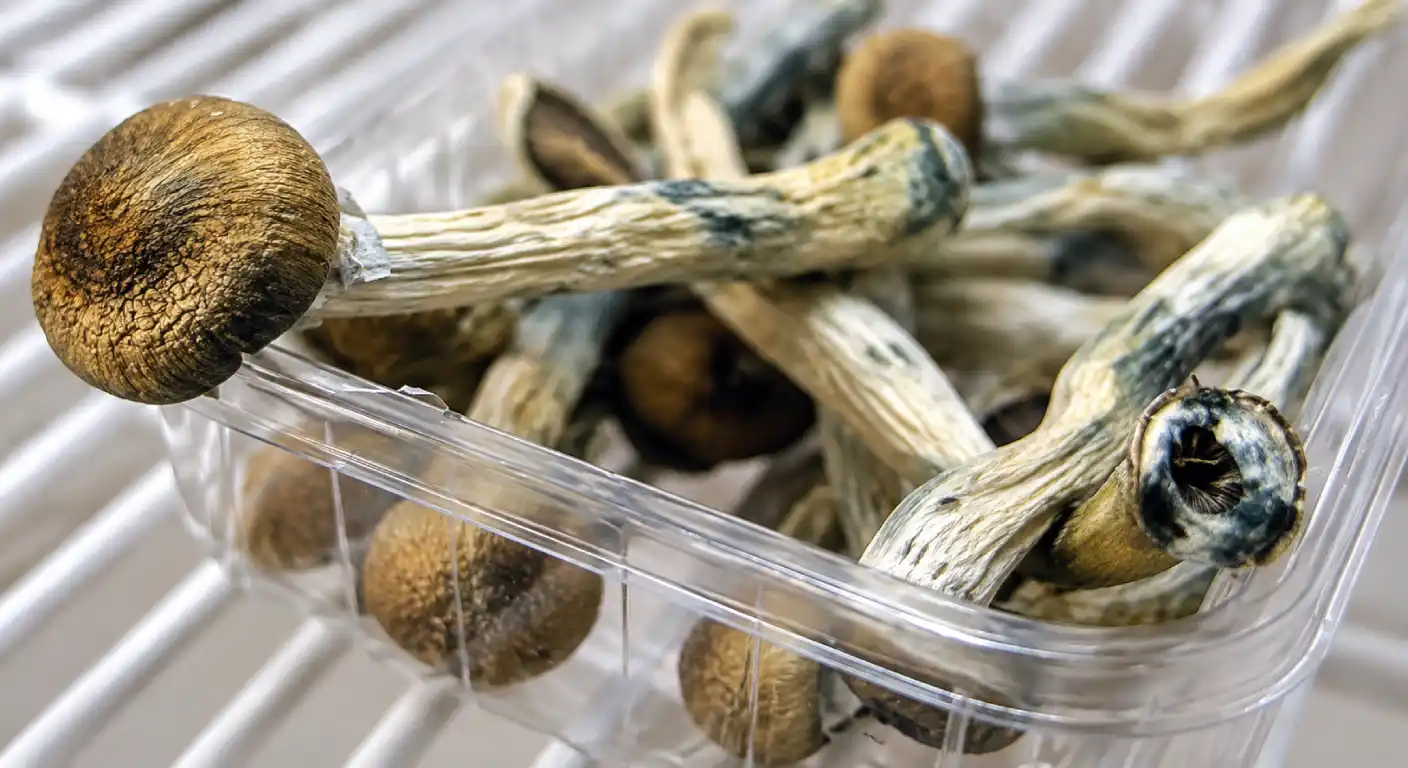
No. COMP360 is a proprietary, manufactured pharmaceutical formulation of synthetic psilocybin given as a measured dose under clinical supervision. Psilocybin mushrooms, fresh or dried, are separately controlled as Class A drugs in the UK under the Misuse of Drugs Act 1971, following a 2005 amendment that closed the earlier fresh-mushroom loophole.
Does King’s College London run psilocybin trials?
Yes. King’s College London’s Psychoactive Trials Group, led by Professor James Rucker, was a UK site for COMP006, and KCL co-launched the Centre for Mental Health Research and Innovation with Compass Pathways and South London and Maudsley NHS Foundation Trust in 2022 (kcl.ac.uk, March 2022 and November 2023).
Are psilocybin trials really placebo-controlled and blinded?
This is genuinely contested. A 2026 JAMA Psychiatry review found that where blinding was tested across psychedelic trials, more than 90% of participants could often correctly guess who got the real drug — though no specific unblinding rate has been published for COMP005 or COMP006 (PubMed 41984443).
What side effects were reported in the trials?
In COMP006’s 25mg arm, the most common were headache, nausea, anxiety, and visual hallucination; 73% of adverse events happened on dosing days and 83% resolved within 24 hours. Serious adverse events occurred in 2% of the 25mg group (Compass Pathways, 17 February 2026).
How long did the benefit last after one dose?
In COMP006, the week 6 benefit in the 25mg group held on average through at least week 26, with almost 30% of week 6 responders reaching remission after a second dose. In COMP005, open-label 52-week data showed continued improvement, but because that phase was unblinded, it counts as an early signal rather than confirmed evidence (Compass Pathways, 7 July 2026 and 9 September 2026).
Sources
- Misuse of Drugs Act 1971, Schedule 2, Part I
- Misuse of Drugs Regulations 2001, Schedule 1
- Misuse of Drugs Regulations 2001, Regulation 5 (Home Office licence requirement)
- Drugs Act 2005, Section 21 (added psilocin-containing fungi to the 1971 Act, in force 18 July 2005)
- ClinicalTrials.gov, COMP005 (NCT05624268)
- ClinicalTrials.gov, COMP006 (NCT05711940)
- Compass Pathways, COMP005 primary endpoint release, 23 June 2025
- Compass Pathways, COMP006 primary endpoint release, 17 February 2026
- Health Research Authority, COMP006 study summary
- King’s College London, COMP006 study page
- Compass Pathways, COMP006 six-month data, 7 July 2026
- Compass Pathways, COMP005 52-week open-label data, 9 September 2026
- Compass Pathways, FDA rolling NDA review announcement, 24 April 2026
- King’s College London, SLaM/Compass partnership launch, 24 March 2022
- King’s College London, Centre for Mental Health Research and Innovation opening, 15 November 2023
- JAMA Psychiatry / PubMed 41984443, 2026 blinding review
- Clinical Trial Vanguard, 2 June 2026
- Drug Discovery Trends, 18 February 2026